
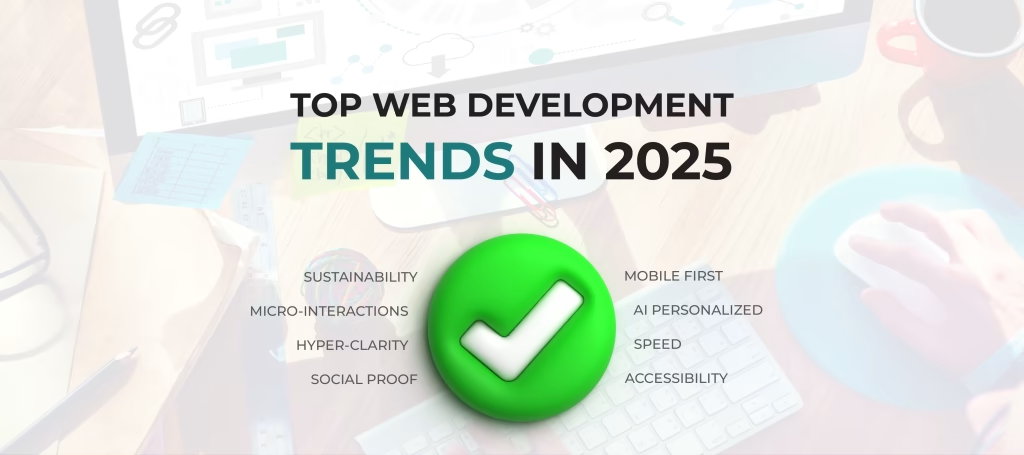
Top Web Design Trends That Shaped 2025
2025 has been a year of serious evolution for web design. The gap between good and great websites has widened and what’s driving it isn’t just how things look, but how they perform.
Here’s the thing: performance has become the new credibility, and AI has gone from being a cool extra to a must-have tool. If your website isn’t keeping up, your 2026 strategy might already be behind. Let’s dig deeper and take a look at these trends.
1. Mobile-first design is the only design
Google’s mobile-first indexing
Google uses your website’s mobile version (not the desktop one) to decide how it ranks and indexes your pages. has made desktop-first layouts practically obsolete. The smartest sites now prioritize thumb-friendly navigation, clean layouts, and lightning-fast load times on small screens.
Like Airbnb‘s redesign focused on mobile usability first, resulting in faster interactions and lower bounce rates.
Checkout Google’s official guide on mobile-first indexing Click Here
2. Speed is Non-Negotiable
If your site takes longer than three seconds to load, users bounce. Period. Optimizing images using WebP or AVIF
WebP and AVIF are modern image formats that make pictures load faster online by keeping high quality but using much smaller file sizes. formats has become standard practice.
If you’re curious how your site stacks up on things like speed, UX, and security, we offer a free website audit. You can check it out here: Click Here
You can also check the insights with google’s PageSpeed Insights
3. Accessibility is the New Baseline
Accessibility isn’t a checklist anymore, it’s how you show respect for every visitor. Following WCAG standards WCAG standards are simple rules to make websites easy for everyone to use, including people with disabilities. like maintaining text contrast, adding alt text, and enabling keyboard navigation is now expected.
Checkout this brief article by Harvard to know more about alt text. Read Here
4. Hyper-Clarity Wins the Hero Section
High-performing sites in 2025 nailed one thing: brutal clarity. One sharp headline that explains your value instantly. No walls of text, no clutter: just purpose. Think of Dropbox. Their homepage headline does the job in one sentence: what they do and why it matters.

At CODE3IS, we’ve applied this principle for clients across industries, delivering bold headlines and clear CTAs that boost conversions. You can see examples in our portfolio.
5. AI-Powered Personalization Becomes Standard
AI has gone beyond chatbots. Sites now deliver dynamic content, smart product recommendations, and adaptive designs based on location or behavior.
Even small e-commerce stores are using tools like Hotjar or ChatGPT integrations to personalize recommendations.
6. Real Proof Over Polished Stock
Stock photos of smiling people don’t cut it anymore. Real stories make the impact. Sites that converted well in 2025 have showcased genuine testimonials, real stats, and visible trust signals like SSL badges
SSL badges are symbols that show a website is secure and protects your data. – not fluff.
Read more about factors affecting web trust in this Neilson Group article.
7. Micro-Interactions That Make You Feel Something
Micro-animations triggered by hover or scroll have turned static sites into living experiences. The subtle movement keeps users engaged and guides attention.
Apple and Stripe both use scroll-triggered storytelling to walk users through their products. Cursor-centric effects and dynamic 3D visuals, especially on portfolio and agency sites, have turned browsing into an experience users remember.
While creating our new landing page out key focus was to add as many animations.
8. Expressive and Thoughtful Typography
Typography has become a storytelling tool in itself. Brands have leaned on bold, custom typefaces that speak personality, paired with minimalist layouts that give each word breathing space. It hasn’t just been design, it’s about identity now.
Checkout Awwwards. This platform display most creative web designs. For knowing what trending in type check Typewolf.
9. Sustainability – A Design Value
A quiet but crucial shift this year has been toward sustainable web design , building websites that perform efficiently without wasting energy. This means cleaner code, optimized assets, and green hosting to shrink what’s known as the digital carbon footprint.
Now, what’s that exactly? It’s the pollution caused by your online activity. For example, when you stream a movie on Netflix, that data travels through servers, networks, and devices, all powered by electricity. The energy consumed creates CO₂, and that’s your digital carbon footprint. Every click, upload, and stream adds up and smart web design is finding ways to make that footprint smaller.